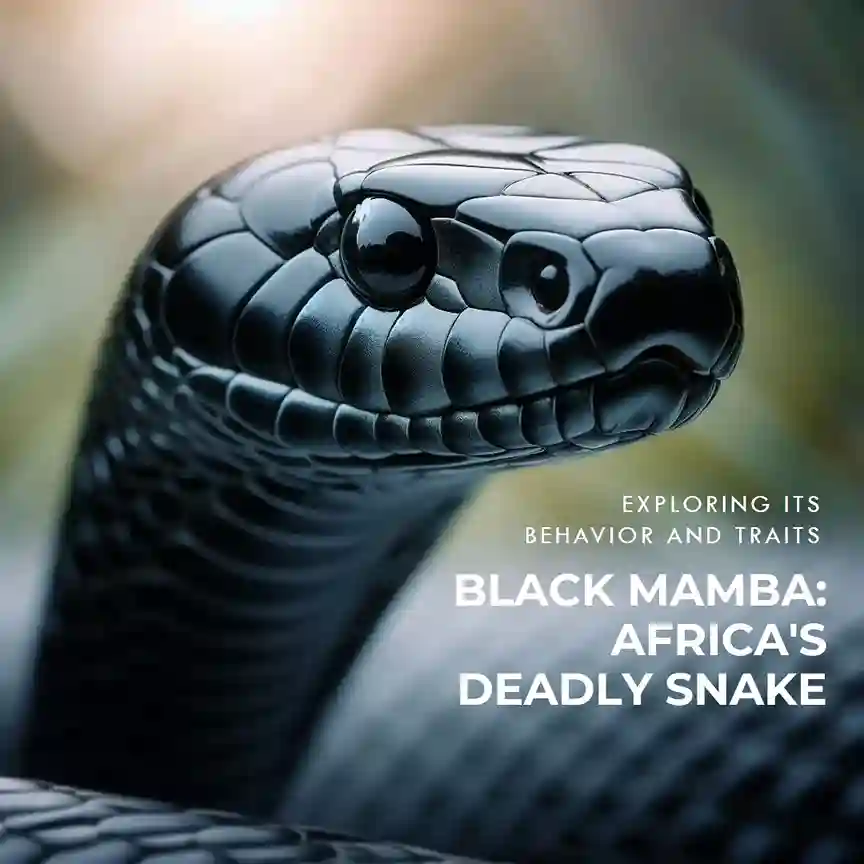
Black Mamba: Deadly Snake of Africa and Its Behavior
The Black Mamba is one of the most dangerous and venomous snakes in the world, renowned for its deadly venom. Found in countries like South Africa, Kenya, and Namibia, this snake belongs to the Elapidae family, which also includes cobras. Though cobras are from the Naja genus and the Black Mamba belongs to the Dendroaspis genus, both share common defensive features. Like cobras, Black Mambas can spread a hood around their head when threatened, warning predators of their potential danger.
Physical Characteristics
The scientific name of the Black Mamba is Dendroaspis polylepis. It prefers open forests, grasslands, and rocky hills as its habitat. Black Mambas are part of the Mamba group, which includes highly venomous snakes, making them some of the deadliest in the world. There are four main species in the Mamba group: Black Mamba, Green Mamba, Eastern Green Mamba, and Jameson’s Mamba. Among them, the Black Mamba is both the largest and most venomous.
It is Africa’s longest venomous snake, second only to the King Cobra. Its length ranges between 2.5 to 4.5 meters (8 to 14.8 feet), with some individuals growing up to 5 meters (16.5 feet). The Black Mamba has a long, slender body and a narrow head. Interestingly, despite its name, its skin is not black but varies from olive green to dark brown, with a lighter underside. Its name comes from the dark black color inside its mouth, which it displays when threatened.
Sexual dimorphism is almost absent in Black Mambas, meaning males and females look very similar in size, shape, and color. Females may be slightly longer, but this difference is not easily noticeable. Both genders are equally dangerous and are known for their aggressive nature and high speed. They can move at speeds up to 20 kilometers per hour, making them one of the fastest snakes in the world.
Behavior and Defense
When feeling threatened, the Black Mamba can produce a loud hissing sound and raise the front part of its body to appear larger to predators. It can strike multiple times in a single attack and inject venom without warning. Despite their aggression, Black Mambas prefer to avoid human contact and are comfortable in their natural territory when undisturbed. However, if provoked or cornered, they will attack immediately, delivering venom powerful enough to affect the nervous system, causing paralysis, respiratory failure, and potentially cardiac arrest if not treated promptly.
The venom dose in a single bite averages 100 to 120 milligrams, while only 10 to 15 milligrams are enough to be lethal to humans. Immediate medical intervention with anti-venom is critical for survival.
Hunting and Diet
Black Mambas are highly skilled predators and primarily feed on small mammals, birds, reptiles, and occasionally other snakes. They use their speed to chase prey and inject venom to immobilize it. Their flexible jaws allow them to swallow prey whole. After consuming a large meal, they can survive for several days without eating due to their slow metabolism.
Their sensory capabilities are highly developed. Black Mambas have excellent eyesight during the day, helping them spot predators and prey from a distance. Their sensitive tongue detects chemical signals in the air, which are processed by the Jacobson’s organ in the mouth, enabling them to locate animals nearby. A specialized pit organ near the upper lip senses body heat, allowing the snake to detect prey even at night. Additionally, they respond to vibrations and touch, aiding them in navigation, hunting, and self-defense.
Predators and Survival
Despite being top predators, Black Mambas are not entirely safe. Eagles, hawks, mongooses, lions, tigers, and King Cobras can pose threats to them. Unlike some social species, Black Mambas are solitary, preferring to live alone and only interact during mating season.
Reproduction
Sexual maturity in Black Mambas is reached between two and three years of age. Mating typically occurs during the warmer months, especially in spring. Male Black Mambas compete with each other for dominance, and the victorious male earns the right to mate with females. The female’s gestation period is approximately two to three months, after which she lays around 17 eggs in a safe and warm location.
The eggs hatch in two to three months, producing young snakes with a bluish-brown coloration, which gradually turns black as they mature. Hatchlings weigh about 40 to 50 grams and are 40 to 50 centimeters long. These young snakes grow rapidly and become similar in size to adults within a few months. Black Mambas do not provide parental care; hatchlings are independent from birth and possess venom potent enough to hunt small birds and mammals immediately.
Lifespan and Conservation
In the wild, the average lifespan of a Black Mamba is approximately 11 years. However, many do not reach this age due to natural predators and human activities. While the species is not currently listed as endangered by the IUCN Red List, habitat loss and human interference have threatened their population.
Black Mambas play a critical role in maintaining ecological balance by controlling populations of rodents and other small animals. Conservation efforts are essential to protect their habitats and ensure safety for humans by minimizing encounters in populated areas.
Conclusion
The Black Mamba is a formidable predator with a combination of speed, agility, and highly toxic venom, making it one of the deadliest snakes in the world. Its hunting skills, sensory abilities, and survival strategies allow it to thrive in harsh African environments. While they prefer solitude and avoid human contact, their venom and aggressive defense make them highly dangerous when threatened. Understanding and respecting their role in the ecosystem is crucial for both conservation and human safety.