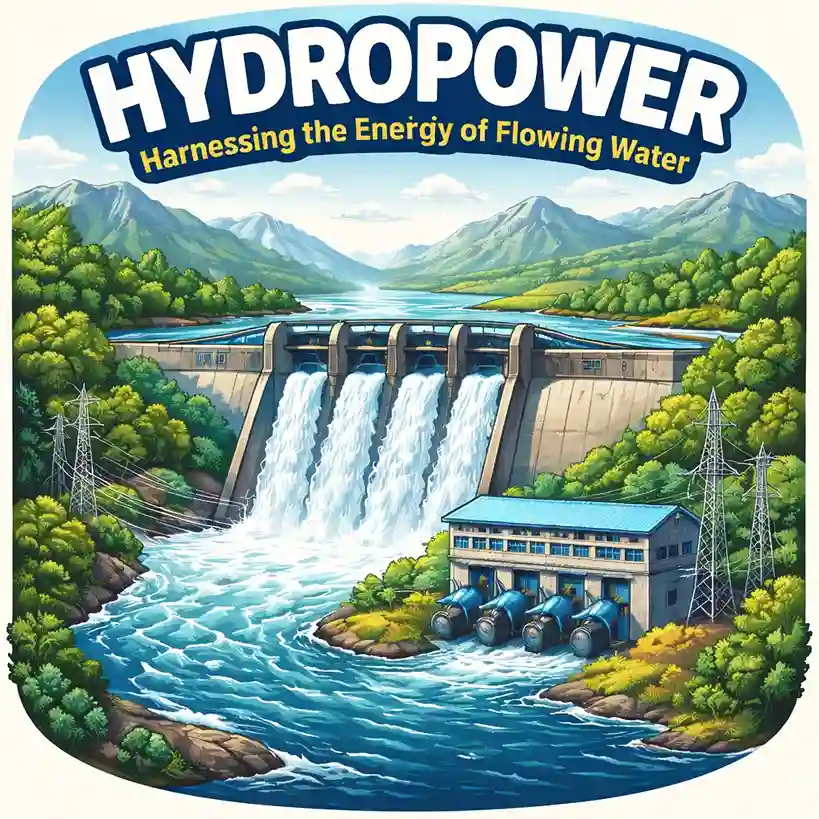
Hydropower: Harnessing the Energy of Flowing Water
For centuries, humans have been using the force of rivers to their advantage. Over 2,000 years ago, the ancient Greeks powered stone wheels with water to grind grains. Today, the electricity that powers our homes owes much to water. Hydropower, or hydroelectricity, is considered the most cost-effective and reliable source of electricity globally.
What is Hydropower?
Hydropower is the process of generating electricity by utilizing the energy of flowing water. The basic principle involves converting the potential energy of stored water into kinetic energy and then into electrical energy using turbines and generators.
The history of hydropower dates back to the late 19th century. British-American engineer James Francis developed the first modern water turbine, and a few decades later, in 1882, the world’s first hydroelectric power plant began operations on a river in Appleton, Wisconsin, USA.
Hydropower plants generally fall into two basic categories: those with dams and reservoirs and those without. Dams store water in large reservoirs for short or long periods, which can then be used to generate electricity. Small-scale hydropower, on the other hand, generates electricity without large dams or reservoirs by diverting part of a river’s flow.
How Hydropower Works
To understand hydropower in simple terms, consider a lake or river where water is stored in a dam at a higher elevation. The water possesses potential energy due to its height. When released through tunnels, it gains kinetic energy. As this moving water strikes the blades of a turbine, the turbine spins rapidly, much like a fan in a kitchen tap that converts water flow into mechanical motion.
The spinning turbine drives a generator, which produces electricity. This process transforms the natural energy of flowing water into mechanical and then electrical energy.
Why Hydropower is Essential
Hydropower is a cornerstone of renewable electricity generation because it produces more power compared to most other renewable sources. Globally, it contributes around 15% of the total electricity produced and 50% of electricity generated from renewable resources. Its efficiency in converting water energy into electricity can reach up to 90%.
Types of Hydropower Plants
Hydropower plants can be categorized based on size, structure, and the way they utilize water:
1. Large-Scale Hydropower (Dams)
Large-scale hydropower plants are built on rivers with substantial reservoirs. The volume of water and the height of the dam determine the amount of electricity generated. One of the largest examples is China’s Three Gorges Dam on the Yangtze River, producing 22,500 MW of electricity. The dam is 2,335 meters long and 181 meters high.
In India, hydropower capacity totals approximately 148,000 MW. Major projects include the Koyna Hydroelectric Project in Maharashtra, Tehri Hydro Power Complex, Sardar Sarovar Dam, and Bhakra Nangal Dam.
2. Small-Scale Hydropower
Small-scale hydropower plants typically generate up to 10 MW of electricity, supplying local communities. In Himachal Pradesh, for example, villages receive electricity from these plants instead of coal-based power to reduce environmental impact.
3. Pumped Storage Hydropower
Pumped storage plants function like giant batteries. They store energy during low-demand periods in lower reservoirs and release it during high-demand periods from upper reservoirs. The Bath County Pumped Storage Station in the USA, the world’s largest of this type, produces 3,000 MW of electricity.
4. Run-of-River Hydropower
Run-of-river plants require no large dams or reservoirs. They divert part of a river’s flow to spin turbines and return water to the river. While electricity production is lower, this method minimizes environmental impact and avoids flooding. An example is the La Grande River Plant in Canada, one of the largest run-of-river facilities.
5. Tidal and Wave Energy
Tidal and wave energy plants harness the power of ocean waves and tides using floating generators or oscillating water columns. South Korea’s Sihwa Lake Tidal Power Station, producing 254 MW, is the largest tidal energy plant globally. These systems are carbon-free and exploit an inexhaustible natural resource.
Advantages of Hydropower
Hydropower offers several key benefits:
- Renewable and Sustainable: It is a reliable source of clean energy.
- Low Greenhouse Gas Emissions: Unlike fossil fuels, hydropower does not emit harmful gases.
- High Efficiency: Up to 90% of water energy is converted into electricity.
- Flood Control and Irrigation: Dams like Bhakra Nangal in Bilaspur provide water for agriculture and prevent floods.
- Local Economic Benefits: Hydropower projects create employment and support local economies. For example, Brazil’s Itaipu Dam supplies electricity while also providing local jobs and resources.
- Multi-Purpose Use: Beyond electricity, hydropower aids water supply, agriculture, and fish farming.
Challenges of Hydropower
Despite its benefits, hydropower has certain drawbacks, particularly in the Indian context:
- Displacement of Communities: Large dams, such as the Tehri Dam, have displaced thousands of people.
- Loss of Land and Forests: Creating reservoirs floods farmland and forests, affecting biodiversity.
- Impact on River Ecology: Dams disrupt natural river flows and fish migration.
- Methane Emissions: Decaying vegetation in reservoirs can release methane, a potent greenhouse gas.
Future of Hydropower
The future of hydropower looks promising due to smarter, greener, and more adaptable technologies. India aims to achieve 500 GW of renewable energy by 2030, with hydropower contributing around 13%. There is an increasing focus on run-of-river projects and pumped storage plants to reduce environmental impact while enhancing grid reliability.
Globally, countries like Norway are modernizing their old plants with AI-powered systems to improve efficiency and reduce water wastage. In India, floating solar panels on dam reservoirs, such as NTPC Ramagundam in Telangana, maximize energy output and minimize water evaporation.
Tidal and wave energy are emerging technologies with significant potential along India’s 7,500 km coastline. Regions like the Gulf of Khambhat in Gujarat and the Sundarbans in West Bengal are suitable for harnessing tidal energy.
Hydropower is more than just electricity generation; it is about balancing human needs with environmental preservation. Whether it is a massive dam or a small village turbine, hydropower has established itself as a reliable, renewable, and adaptable energy source.
In essence, water is life, and the electricity generated from it is the lifeline of our growth and development. As technology advances, hydropower will continue to play a crucial role in a sustainable green future.